
CrPC
Chapter XII
S. 164
Recording of confessions and statements
Description
Any Metropolitan Magistrate or Judicial Magistrate may, whether or not he has jurisdiction in the case, record any confession or statement made to him in the course of an investigation under this Chapter or under any other law for the time being in force, or at any time afterwards before the commencement of the inquiry or trial:
Provided that any confession or statement made under this sub-section may also be recorded by audio-video electronic means in the presence of the advocate of the person accused of an offence;
Provided further that no confession shall be recorded by a police officer on whom any power of a Magistrate has been conferred under any law for the time being in force.
The Magistrate shall, before recording any such confession, explain to the person making it that he is not bound to make a confession and that, if he does so, it may be used as evidence against him; and the Magistrate shall not record any such confession unless, upon questioning the person making it, he has reason to believe that it is being made voluntarily.
If at any time before the confession is recorded, the person appearing before the Magistrate states that he is not willing to make the confession, the Magistrate shall not authorise the detention of such person in police custody.
Any such confession shall be recorded in the manner provided in section 281 for recording the examination of an accused person and shall be signed by the person making the confession; and the Magistrate shall make a memorandum at the foot of such record to the following effect:-
“I have explained to (name) that he is not bound to make a confession and that, if he does so, any confession he may make may be used as evidence against him and I believe that this confession was voluntarily made. It was taken in my presence and hearing, and was read over to the person making it and admitted by him to be correct, and it contains a full and true account of the statement made by him.
(Signed) A.B.
Magistrate”.
Any statement (other than a confession) made under Sub-Section (1) shall be recorded in such manner hereinafter provided for the recording of evidence as is, in the opinion of the Magistrate, best fitted to the circumstances of the case; and the Magistrate shall have power to administer oath to the person whose statement is so recorded.
(5A)1 —In cases punishable under section 354, section 354A, section 354B, section 354C, section 354D, sub-section (1) or sub-section (2) of section 376, section 376A, section1 376AB, section 376B, section 376C, section 376D, section 376DA, section 376DB, section 376E or section 509 of the Indian Penal Code, the Judicial Magistrate shall record the statement of the person against whom such offence has been committed in the manner prescribed in sub-section (5), as soon as the commission of the offence is brought to the notice of the police;
Provided that if the person making the statement is temporarily or permanently mentally or physically disabled, the Magistrate shall take the assistance of an interpreter or a special educator in recording the statement;
Provided further that if the person making the statement is temporarily or permanently mentally or physically disabled, the statement made by the person, with the assistance of an interpreter or a special educator, shall be video graphed.
A statement recorded under clause (a) of a person, who is temporarily or permanently mentally or physically disabled, shall be considered a statement in lieu of examination-in-chief, as specified in section 137 of the Indian Evidence Act, 1872 such that the maker of the statement can be cross-examined on such statement, without the need for recording the same at the time of trial.
The Magistrate recording a confession or statement under this section shall forward it to the Magistrate by whom the case is to be inquired into or tried.
1 Criminal Law (Amendment) Act, 2018
CrPC
Chapter XII
S. 164 A
Medical examination of the victim of rape
Description
Where, during the stage when an offence of committing rape or attempt to commit rape is under investigation, it is proposed to get the person of the woman with whom rape is alleged or attempted to have been committed or attempted, examined by a medical expert, such examination shall be conducted by a registered medical practitioner employed in a hospital run by the Government or a local authority and in the absence of such a practitioner, by any other registered medical practitioner, with the consent of such woman or of a person competent to give such consent on her behalf and such woman shall be sent to such registered medical practitioner within twenty-four hours from the time of receiving the information relating to the commission of such offence.
The registered medical practitioner, to whom such woman is sent shall, without delay, examine her person and prepare a report of his examination giving the following particulars, namely—the name and address of the woman and of the person by whom she was brought;
the age of the woman;
the description of material taken from the person of the woman for DNA profiling;
marks of injury, if any, on the person of the woman;
general mental condition of the woman; and
other material particulars in reasonable detail,
The report shall state precisely the reasons for each conclusion arrived at.
The report shall specifically record that the consent of the woman or of the person competent, to give such consent on her behalf to such examination had been obtained.
The exact time of commencement and completion of the examination shall also be noted in the report.
The registered medical practitioner shall, without delay forward the report to the investigating officer who shall forward it to the Magistrate referred to in section 173 as part of the documents referred to in clause (a) of Sub-Section (5) of that section.
Nothing in this section shall be construed as rendering lawful any examination without the consent of the woman or of any person competent to give such consent on her behalf.
MEMBERSHIP OPEN
JOIN THE TOP AND MOST REPUTED HUMAN RIGHTS MOVEMENT OF THE COUNTRY AND
RAISE YOUR VOICE FOR THE VOICELESS PEOPLE
Top Criminal Advocate
Top Human Rights Advocate
SPEAK BEFORE APPLY FOR THE MEMBERSHIP
For more details, visit below
9873005424, 9873087903
ALL INDIA COUNCIL OF HUMAN RIGHTS, LIBERTIES & SOCIAL JUSTICE
(AICHLS) is founded by Dr. Anthony Raju - Advocate, Supreme Court of India, Dynamic Internationally Accredited Human Rights Defender, Inspirational, spiritual and motivational speaker, Peace Activist & Social Worker and is one of global's foremost voices of Human Rights and powerful voice for voiceless people globally.
All India council of human rights, liberties & social justice has been added as signatory to UNITED NATION GLOBAL COMPACT. The world's largest corporate responsibility initiative with nearly 12,000 business and non-business participants in 140 countries. That All India Council of Human Rights, Liberties & Social Justice (AICHLS), is a duly registered Society under the Societies Registration Act XXI of 1860, and is functioning with commitment to the Noble Cause of Human Rights Protection and Promotion, Justice for All, Economic Upliftment of the Underprivileged, Education, Love, Peace, Harmony and Friendship, National & International Integration by Exchange of Ideas & Ethos in India and also amongst the neighbouring countries and the people of the rest of the World at large.
Dr. Anthony Raju
Advocate , Supreme Court of India.
Global Chairman , All India Council of Human Rights, Liberties & Social Justice.
Chairman - National Legal Council
International Convener, Universal mission for Peace and Human Rights.
Chairman, National Council of News and Broadcasting.
Secretary General : Asian Human Rights Council
International Peace keeper
Most Rev. Dr. Anthony Raju - Advocate, Supreme Court of India and a dynamic criminal advocate, dedicated, internationally accredited HUMAN RIGHTS, PEACE Ambassador and is one of Global's foremost voices of Human Rights.
According to Dr. Anthony “Criminal is one of the few professions where the client buys someone’s luck. The luck of most people is strictly non-transferable. But a good criminal lawyer can sell all his luck to client and the more the luck he sells the more he has to sell.
The qualities/attributes to become a successful criminal lawyer is, one needs to be dedicated, willing to put in hard work, have lots of stamina and loads of perseverance. These four qualities and integrity are fundamental to a successful career in criminal law. It has been believed by people that criminal law involves limited drafting and that the workload is not heavy. But be it a trial strategy, a bail or a cross-examination, one has to put in long hours of research before work begins in court.
He is well well-known TEDx Speaker, a Highly acclaimed Keynote and Public Speaker, a very respected Panellist on a Very reputable Media House, TV Channels National and International, a Motivational Speaker, Educator, Journalist, Writer, and Corporate Legal Advisor, Diplomat, Eminent Social Reformer, Environmentalist, Educator, Human Rights and Constitutional Rights Activist, Motivator, Change maker, Teacher Trainer, Disaster management Expert, Panel Arbitrator in National & International Level, Legal Aid Expert, Academician, Humanitarian work Expert, etc.
Dr. Anthony Raju has been awarded several National and International Awards for his Excellent work for more than 15 Years in promoting and protecting Human Rights. He has been awarded with several (Honoris Causa) Degrees, Like a Doctor of Sociology, and a Doctorate of Human Rights by International Peace University, Germany, Ph.D. Social Work by Universal Academy for Global Peace, Lifetime membership and Award by International Journalism Centre, National Human Rights Activist Award by All India Newspaper Association, Ambassador of Peace Award by Blind Association, Peace Ambassador by Global Peace Initiative -USA
Dr. Anthony Raju has justified his position many times against capital punishment, he has publicly condemned this barbaric act in the name of punishment. He has written several articles on extra-judicial Killings, Violence Against Women, the Right to Education, Rights to Information Contemporary forms of slavery, the Right to an adequate Standard of living, Extrajudicial, summary of arbitrary executions, Sale of Children, Child prostitution, Independence of Judges and Lawyers.
Dr. Anthony Raju spends most of their time between Tribal, underprivileged, Villages, he widely travels in various States, majorly in the Tribal and Rural belts of India, South Africa, and internationally.
This story and article is compiled by Simran and Ashish (PR/Corporate Communication Team) of Most Rev. Amb. Dr. Anthony Raju.
For any support: +919873005424 (Sms/WhasApp/Call)
www.flickr.com/people/anthonyraju
List of Last Awardees
https://internationalhumanrightsawards.blogspot.com/
#dranthonyraju #tophumanrightsactivist #globalpeaceactivist #dranthonyrajuadvocate
https://www.flickr.com/people/anthonyraju/
https://www.flickr.com/photos/anthonyraju/
http://www.ihrac.org/
https://www.hrcin.org/
https://humanrightscouncil.in/
https://www.newsindiatoday.co.in
www.groundreports.in
www.iprc.in
http://www.ncnb.in/
https://www.linkedin.com/in/anthonyraju/
https://www.facebook.com/aichlsin
https://twitter.com/aichls
http://www.anthonyraju.com/
http://www.juneann.in/
https://www.youtube.com/user/TheHumanrightsindia/
http://www.xavierinstitutions.org/
www.asianhumanrightscouncil.org
www.internationalhumanrightscouncil.org
======================================================
#dranthonyraju #drjuneann #drtessmartin #drameenaali #aparathapa, #sandeepmarwah, #Tophumanrightscouncil, #Humanrightsinindia #Socialjustice, #freelegalhelp #HumanRightsOrganizationsInIndia, #HumanRightsComplaint, #HumanRights, #AdvocateSupremeCourt #HumanRightsMembership ##TopHumanRightsOrganisationofIndia #peace #gahrc #humanrightseducation #humanrightsleadership #humanitarian #ihrac #dranthonyrajutopcriminaladvocate #aichls #ncnb #humanrightsambassador #tophumanrightsactivistofindia #motivationalspeaker #inspirationalspeaker #nhrc #tophumanrightsadvocateof india #topcriminaladvocate #nationalhumanrightscommission #topcriminaladvocatesupremecourtofindia #majorgeneralrajankochhar #drmoustaffaattarwala ##frjoshymichael
"Human Rights In India, Social Justice, Human Rights Commission, National Human Rights Commission, Human Rights Organizations In India, State Human Rights Commission, Human Rights Commission Delhi, Human Rights Complaint, Human Rights, Advocate Supreme Court, Human Rights Membership, Top Human Rights Organisation of India" "Human Rights In India, Dr. Anthony Raju Advocate Supreme Court, Human Rights Membership, Top Human Rights Organisation of India"
top 10 criminal law firms in india
top criminal law firms in india
top 10 criminal lawyers in mumbai
famous criminal lawyers
top criminal lawyers in mumbai
best criminal lawyer in world
best criminal lawyer in supreme court
top female criminal lawyers in india
LEGAL AND LEGAL Associates
Read more at: https://devgan.in/crpc/section/164/
Patna Gang Rape
https://www.aajtak.in/bihar/story/gang-rape-of-daughter-in-front-of-mother-muzaffarpur-bihar-lclar-1863002-2024-01-19
Highly condemable act said Dr Anthony Raju Advocate Supreme court
Demand fast conviction in such cases
MEMBERSHIP OPEN
JOIN THE TOP AND MOST REPUTED HUMAN RIGHTS MOVEMENT OF THE COUNTRY AND
RAISE YOUR VOICE FOR THE VOICELESS PEOPLE
Top Criminal Advocate
Top Human Rights Advocate
SPEAK BEFORE APPLY FOR THE MEMBERSHIP
For more details, visit below
9873005424, 9873087903
ALL INDIA COUNCIL OF HUMAN RIGHTS, LIBERTIES & SOCIAL JUSTICE
(AICHLS) is founded by Dr. Anthony Raju - Advocate, Supreme Court of India, Dynamic Internationally Accredited Human Rights Defender, Inspirational, spiritual and motivational speaker, Peace Activist & Social Worker and is one of global's foremost voices of Human Rights and powerful voice for voiceless people globally.
All India council of human rights, liberties & social justice has been added as signatory to UNITED NATION GLOBAL COMPACT. The world's largest corporate responsibility initiative with nearly 12,000 business and non-business participants in 140 countries. That All India Council of Human Rights, Liberties & Social Justice (AICHLS), is a duly registered Society under the Societies Registration Act XXI of 1860, and is functioning with commitment to the Noble Cause of Human Rights Protection and Promotion, Justice for All, Economic Upliftment of the Underprivileged, Education, Love, Peace, Harmony and Friendship, National & International Integration by Exchange of Ideas & Ethos in India and also amongst the neighbouring countries and the people of the rest of the World at large.
Dr. Anthony Raju
Advocate , Supreme Court of India.
Global Chairman , All India Council of Human Rights, Liberties & Social Justice.
Chairman - National Legal Council
International Convener, Universal mission for Peace and Human Rights.
Chairman, National Council of News and Broadcasting.
Secretary General : Asian Human Rights Council
International Peace keeper
Most Rev. Dr. Anthony Raju - Advocate, Supreme Court of India and a dynamic criminal advocate, dedicated, internationally accredited HUMAN RIGHTS, PEACE Ambassador and is one of Global's foremost voices of Human Rights.
According to Dr. Anthony “Criminal is one of the few professions where the client buys someone’s luck. The luck of most people is strictly non-transferable. But a good criminal lawyer can sell all his luck to client and the more the luck he sells the more he has to sell.
The qualities/attributes to become a successful criminal lawyer is, one needs to be dedicated, willing to put in hard work, have lots of stamina and loads of perseverance. These four qualities and integrity are fundamental to a successful career in criminal law. It has been believed by people that criminal law involves limited drafting and that the workload is not heavy. But be it a trial strategy, a bail or a cross-examination, one has to put in long hours of research before work begins in court.
He is well well-known TEDx Speaker, a Highly acclaimed Keynote and Public Speaker, a very respected Panellist on a Very reputable Media House, TV Channels National and International, a Motivational Speaker, Educator, Journalist, Writer, and Corporate Legal Advisor, Diplomat, Eminent Social Reformer, Environmentalist, Educator, Human Rights and Constitutional Rights Activist, Motivator, Change maker, Teacher Trainer, Disaster management Expert, Panel Arbitrator in National & International Level, Legal Aid Expert, Academician, Humanitarian work Expert, etc.
Dr. Anthony Raju has been awarded several National and International Awards for his Excellent work for more than 15 Years in promoting and protecting Human Rights. He has been awarded with several (Honoris Causa) Degrees, Like a Doctor of Sociology, and a Doctorate of Human Rights by International Peace University, Germany, Ph.D. Social Work by Universal Academy for Global Peace, Lifetime membership and Award by International Journalism Centre, National Human Rights Activist Award by All India Newspaper Association, Ambassador of Peace Award by Blind Association, Peace Ambassador by Global Peace Initiative -USA
Dr. Anthony Raju has justified his position many times against capital punishment, he has publicly condemned this barbaric act in the name of punishment. He has written several articles on extra-judicial Killings, Violence Against Women, the Right to Education, Rights to Information Contemporary forms of slavery, the Right to an adequate Standard of living, Extrajudicial, summary of arbitrary executions, Sale of Children, Child prostitution, Independence of Judges and Lawyers.
Dr. Anthony Raju spends most of their time between Tribal, underprivileged, Villages, he widely travels in various States, majorly in the Tribal and Rural belts of India, South Africa, and internationally.
This story and article is compiled by Simran and Ashish (PR/Corporate Communication Team) of Most Rev. Amb. Dr. Anthony Raju.
For any support: +919873005424 (Sms/WhasApp/Call)
www.flickr.com/people/anthonyraju
List of Last Awardees
https://internationalhumanrightsawards.blogspot.com/
#dranthonyraju #tophumanrightsactivist #globalpeaceactivist #dranthonyrajuadvocate
https://www.flickr.com/people/anthonyraju/
https://www.flickr.com/photos/anthonyraju/
http://www.ihrac.org/
https://www.hrcin.org/
https://humanrightscouncil.in/
https://www.newsindiatoday.co.in
www.groundreports.in
www.iprc.in
http://www.ncnb.in/
https://www.linkedin.com/in/anthonyraju/
https://www.facebook.com/aichlsin
https://twitter.com/aichls
http://www.anthonyraju.com/
http://www.juneann.in/
https://www.youtube.com/user/TheHumanrightsindia/
http://www.xavierinstitutions.org/
www.asianhumanrightscouncil.org
www.internationalhumanrightscouncil.org
======================================================
#dranthonyraju #drjuneann #drtessmartin #drameenaali #aparathapa, #sandeepmarwah, #Tophumanrightscouncil, #Humanrightsinindia #Socialjustice, #freelegalhelp #HumanRightsOrganizationsInIndia, #HumanRightsComplaint, #HumanRights, #AdvocateSupremeCourt #HumanRightsMembership ##TopHumanRightsOrganisationofIndia #peace #gahrc #humanrightseducation #humanrightsleadership #humanitarian #ihrac #dranthonyrajutopcriminaladvocate #aichls #ncnb #humanrightsambassador #tophumanrightsactivistofindia #motivationalspeaker #inspirationalspeaker #nhrc #tophumanrightsadvocateof india #topcriminaladvocate #nationalhumanrightscommission #topcriminaladvocatesupremecourtofindia #majorgeneralrajankochhar #drmoustaffaattarwala ##frjoshymichael
"Human Rights In India, Social Justice, Human Rights Commission, National Human Rights Commission, Human Rights Organizations In India, State Human Rights Commission, Human Rights Commission Delhi, Human Rights Complaint, Human Rights, Advocate Supreme Court, Human Rights Membership, Top Human Rights Organisation of India" "Human Rights In India, Dr. Anthony Raju Advocate Supreme Court, Human Rights Membership, Top Human Rights Organisation of India"
top 10 criminal law firms in india
top criminal law firms in india
top 10 criminal lawyers in mumbai
famous criminal lawyers
top criminal lawyers in mumbai
best criminal lawyer in world
best criminal lawyer in supreme court
NCRB Report: Bengal tops acid attack cases for third year in a row, activists say ‘it’s just tip of iceberg’
Uttar Pradesh with 25 victims in 23 incidents and one incident of attempt to acid attack is second on the list, and Madhya Pradesh with 11 victims in seven incidents third.
https://indianexpress.com/article/cities/kolkata/ncrb-report-bengal-tops-acid-attack-cases-for-third-year-in-a-row-activists-say-its-just-tip-of-iceberg-9073769/
=====================================
MEMBERSHIP OPEN
JOIN THE TOP AND MOST REPUTED HUMAN RIGHTS MOVEMENT OF THE COUNTRY AND
RAISE YOUR VOICE FOR THE VOICELESS PEOPLE
Top Criminal Advocate
Top Human Rights Advocate
SPEAK BEFORE APPLY FOR THE MEMBERSHIP
For more details, visit below
9873005424, 9873087903
ALL INDIA COUNCIL OF HUMAN RIGHTS, LIBERTIES & SOCIAL JUSTICE
(AICHLS) is founded by Dr. Anthony Raju - Advocate, Supreme Court of India, Dynamic Internationally Accredited Human Rights Defender, Inspirational, spiritual and motivational speaker, Peace Activist & Social Worker and is one of global's foremost voices of Human Rights and powerful voice for voiceless people globally.
All India council of human rights, liberties & social justice has been added as signatory to UNITED NATION GLOBAL COMPACT. The world's largest corporate responsibility initiative with nearly 12,000 business and non-business participants in 140 countries. That All India Council of Human Rights, Liberties & Social Justice (AICHLS), is a duly registered Society under the Societies Registration Act XXI of 1860, and is functioning with commitment to the Noble Cause of Human Rights Protection and Promotion, Justice for All, Economic Upliftment of the Underprivileged, Education, Love, Peace, Harmony and Friendship, National & International Integration by Exchange of Ideas & Ethos in India and also amongst the neighbouring countries and the people of the rest of the World at large.
Dr. Anthony Raju
Advocate , Supreme Court of India.
Global Chairman , All India Council of Human Rights, Liberties & Social Justice.
Chairman - National Legal Council
International Convener, Universal mission for Peace and Human Rights.
Chairman, National Council of News and Broadcasting.
Secretary General : Asian Human Rights Council
International Peace keeper
Most Rev. Dr. Anthony Raju - Advocate, Supreme Court of India and a dynamic criminal advocate, dedicated, internationally accredited HUMAN RIGHTS, PEACE Ambassador and is one of Global's foremost voices of Human Rights.
According to Dr. Anthony “Criminal is one of the few professions where the client buys someone’s luck. The luck of most people is strictly non-transferable. But a good criminal lawyer can sell all his luck to client and the more the luck he sells the more he has to sell.
The qualities/attributes to become a successful criminal lawyer is, one needs to be dedicated, willing to put in hard work, have lots of stamina and loads of perseverance. These four qualities and integrity are fundamental to a successful career in criminal law. It has been believed by people that criminal law involves limited drafting and that the workload is not heavy. But be it a trial strategy, a bail or a cross-examination, one has to put in long hours of research before work begins in court.
He is well well-known TEDx Speaker, a Highly acclaimed Keynote and Public Speaker, a very respected Panellist on a Very reputable Media House, TV Channels National and International, a Motivational Speaker, Educator, Journalist, Writer, and Corporate Legal Advisor, Diplomat, Eminent Social Reformer, Environmentalist, Educator, Human Rights and Constitutional Rights Activist, Motivator, Change maker, Teacher Trainer, Disaster management Expert, Panel Arbitrator in National & International Level, Legal Aid Expert, Academician, Humanitarian work Expert, etc.
Dr. Anthony Raju has been awarded several National and International Awards for his Excellent work for more than 15 Years in promoting and protecting Human Rights. He has been awarded with several (Honoris Causa) Degrees, Like a Doctor of Sociology, and a Doctorate of Human Rights by International Peace University, Germany, Ph.D. Social Work by Universal Academy for Global Peace, Lifetime membership and Award by International Journalism Centre, National Human Rights Activist Award by All India Newspaper Association, Ambassador of Peace Award by Blind Association, Peace Ambassador by Global Peace Initiative -USA
Dr. Anthony Raju has justified his position many times against capital punishment, he has publicly condemned this barbaric act in the name of punishment. He has written several articles on extra-judicial Killings, Violence Against Women, the Right to Education, Rights to Information Contemporary forms of slavery, the Right to an adequate Standard of living, Extrajudicial, summary of arbitrary executions, Sale of Children, Child prostitution, Independence of Judges and Lawyers.
Dr. Anthony Raju spends most of their time between Tribal, underprivileged, Villages, he widely travels in various States, majorly in the Tribal and Rural belts of India, South Africa, and internationally.
This story and article is compiled by Simran and Ashish (PR/Corporate Communication Team) of Most Rev. Amb. Dr. Anthony Raju.
For any support: +919873005424 (Sms/WhasApp/Call)
www.flickr.com/people/anthonyraju
List of Last Awardees
https://internationalhumanrightsawards.blogspot.com/
#dranthonyraju #tophumanrightsactivist #globalpeaceactivist #dranthonyrajuadvocate
https://www.flickr.com/people/anthonyraju/
https://www.flickr.com/photos/anthonyraju/
http://www.ihrac.org/
https://www.hrcin.org/
https://humanrightscouncil.in/
https://www.newsindiatoday.co.in
www.groundreports.in
www.iprc.in
http://www.ncnb.in/
https://www.linkedin.com/in/anthonyraju/
https://www.facebook.com/aichlsin
https://twitter.com/aichls
http://www.anthonyraju.com/
http://www.juneann.in/
https://www.youtube.com/user/TheHumanrightsindia/
http://www.xavierinstitutions.org/
www.asianhumanrightscouncil.org
www.internationalhumanrightscouncil.org
======================================================
#dranthonyraju #drjuneann #drtessmartin #drameenaali #aparathapa, #sandeepmarwah, #Tophumanrightscouncil, #Humanrightsinindia #Socialjustice, #freelegalhelp #HumanRightsOrganizationsInIndia, #HumanRightsComplaint, #HumanRights, #AdvocateSupremeCourt #HumanRightsMembership ##TopHumanRightsOrganisationofIndia #peace #gahrc #humanrightseducation #humanrightsleadership #humanitarian #ihrac #dranthonyrajutopcriminaladvocate #aichls #ncnb #humanrightsambassador #tophumanrightsactivistofindia #motivationalspeaker #inspirationalspeaker #nhrc #tophumanrightsadvocateof india #topcriminaladvocate #nationalhumanrightscommission #topcriminaladvocatesupremecourtofindia #majorgeneralrajankochhar #drmoustaffaattarwala ##frjoshymichael
"Human Rights In India, Social Justice, Human Rights Commission, National Human Rights Commission, Human Rights Organizations In India, State Human Rights Commission, Human Rights Commission Delhi, Human Rights Complaint, Human Rights, Advocate Supreme Court, Human Rights Membership, Top Human Rights Organisation of India" "Human Rights In India, Dr. Anthony Raju Advocate Supreme Court, Human Rights Membership, Top Human Rights Organisation of India"
top 10 criminal law firms in india
top criminal law firms in india
top 10 criminal lawyers in mumbai
famous criminal lawyers
top criminal lawyers in mumbai
best criminal lawyer in world
best criminal lawyer in supreme court
top female criminal lawyers in india
LEGAL AND LEGAL Associates
Over 4.45 lakh crimes against women in 2022, one every 51 minutes: NCRB
Uttar Pradesh leads in crimes against women in absolute numbers, while Kolkata remains the safest metropolis for three consecutive years.
Published : Dec 06, 2023 21:27 IST - 10 MINS READ
=====
====
MEMBERSHIP OPEN
JOIN THE TOP AND MOST REPUTED HUMAN RIGHTS MOVEMENT OF THE COUNTRY AND
RAISE YOUR VOICE FOR THE VOICELESS PEOPLE
Top Criminal Advocate
Top Human Rights Advocate
SPEAK BEFORE APPLY FOR THE MEMBERSHIP
For more details, visit below
9873005424, 9873087903
ALL INDIA COUNCIL OF HUMAN RIGHTS, LIBERTIES & SOCIAL JUSTICE
(AICHLS) is founded by Dr. Anthony Raju - Advocate, Supreme Court of India, Dynamic Internationally Accredited Human Rights Defender, Inspirational, spiritual and motivational speaker, Peace Activist & Social Worker and is one of global's foremost voices of Human Rights and powerful voice for voiceless people globally.
All India council of human rights, liberties & social justice has been added as signatory to UNITED NATION GLOBAL COMPACT. The world's largest corporate responsibility initiative with nearly 12,000 business and non-business participants in 140 countries. That All India Council of Human Rights, Liberties & Social Justice (AICHLS), is a duly registered Society under the Societies Registration Act XXI of 1860, and is functioning with commitment to the Noble Cause of Human Rights Protection and Promotion, Justice for All, Economic Upliftment of the Underprivileged, Education, Love, Peace, Harmony and Friendship, National & International Integration by Exchange of Ideas & Ethos in India and also amongst the neighbouring countries and the people of the rest of the World at large.
Dr. Anthony Raju
Advocate , Supreme Court of India.
Global Chairman , All India Council of Human Rights, Liberties & Social Justice.
Chairman - National Legal Council
International Convener, Universal mission for Peace and Human Rights.
Chairman, National Council of News and Broadcasting.
Secretary General : Asian Human Rights Council
International Peace keeper
Most Rev. Dr. Anthony Raju - Advocate, Supreme Court of India and a dynamic criminal advocate, dedicated, internationally accredited HUMAN RIGHTS, PEACE Ambassador and is one of Global's foremost voices of Human Rights.
According to Dr. Anthony “Criminal is one of the few professions where the client buys someone’s luck. The luck of most people is strictly non-transferable. But a good criminal lawyer can sell all his luck to client and the more the luck he sells the more he has to sell.
The qualities/attributes to become a successful criminal lawyer is, one needs to be dedicated, willing to put in hard work, have lots of stamina and loads of perseverance. These four qualities and integrity are fundamental to a successful career in criminal law. It has been believed by people that criminal law involves limited drafting and that the workload is not heavy. But be it a trial strategy, a bail or a cross-examination, one has to put in long hours of research before work begins in court.
He is well well-known TEDx Speaker, a Highly acclaimed Keynote and Public Speaker, a very respected Panellist on a Very reputable Media House, TV Channels National and International, a Motivational Speaker, Educator, Journalist, Writer, and Corporate Legal Advisor, Diplomat, Eminent Social Reformer, Environmentalist, Educator, Human Rights and Constitutional Rights Activist, Motivator, Change maker, Teacher Trainer, Disaster management Expert, Panel Arbitrator in National & International Level, Legal Aid Expert, Academician, Humanitarian work Expert, etc.
Dr. Anthony Raju has been awarded several National and International Awards for his Excellent work for more than 15 Years in promoting and protecting Human Rights. He has been awarded with several (Honoris Causa) Degrees, Like a Doctor of Sociology, and a Doctorate of Human Rights by International Peace University, Germany, Ph.D. Social Work by Universal Academy for Global Peace, Lifetime membership and Award by International Journalism Centre, National Human Rights Activist Award by All India Newspaper Association, Ambassador of Peace Award by Blind Association, Peace Ambassador by Global Peace Initiative -USA
Dr. Anthony Raju has justified his position many times against capital punishment, he has publicly condemned this barbaric act in the name of punishment. He has written several articles on extra-judicial Killings, Violence Against Women, the Right to Education, Rights to Information Contemporary forms of slavery, the Right to an adequate Standard of living, Extrajudicial, summary of arbitrary executions, Sale of Children, Child prostitution, Independence of Judges and Lawyers.
Dr. Anthony Raju spends most of their time between Tribal, underprivileged, Villages, he widely travels in various States, majorly in the Tribal and Rural belts of India, South Africa, and internationally.
This story and article is compiled by Simran and Ashish (PR/Corporate Communication Team) of Most Rev. Amb. Dr. Anthony Raju.
For any support: +919873005424 (Sms/WhasApp/Call)
www.flickr.com/people/anthonyraju
List of Last Awardees
https://internationalhumanrightsawards.blogspot.com/
#dranthonyraju #tophumanrightsactivist #globalpeaceactivist #dranthonyrajuadvocate
https://www.flickr.com/people/anthonyraju/
https://www.flickr.com/photos/anthonyraju/
http://www.ihrac.org/
https://www.hrcin.org/
https://humanrightscouncil.in/
https://www.newsindiatoday.co.in
www.groundreports.in
www.iprc.in
http://www.ncnb.in/
https://www.linkedin.com/in/anthonyraju/
https://www.facebook.com/aichlsin
https://twitter.com/aichls
http://www.anthonyraju.com/
http://www.juneann.in/
https://www.youtube.com/user/TheHumanrightsindia/
http://www.xavierinstitutions.org/
www.asianhumanrightscouncil.org
www.internationalhumanrightscouncil.org
======================================================
#dranthonyraju #drjuneann #drtessmartin #drameenaali #aparathapa, #sandeepmarwah, #Tophumanrightscouncil, #Humanrightsinindia #Socialjustice, #freelegalhelp #HumanRightsOrganizationsInIndia, #HumanRightsComplaint, #HumanRights, #AdvocateSupremeCourt #HumanRightsMembership ##TopHumanRightsOrganisationofIndia #peace #gahrc #humanrightseducation #humanrightsleadership #humanitarian #ihrac #dranthonyrajutopcriminaladvocate #aichls #ncnb #humanrightsambassador #tophumanrightsactivistofindia #motivationalspeaker #inspirationalspeaker #nhrc #tophumanrightsadvocateof india #topcriminaladvocate #nationalhumanrightscommission #topcriminaladvocatesupremecourtofindia #majorgeneralrajankochhar #drmoustaffaattarwala ##frjoshymichael
"Human Rights In India, Social Justice, Human Rights Commission, National Human Rights Commission, Human Rights Organizations In India, State Human Rights Commission, Human Rights Commission Delhi, Human Rights Complaint, Human Rights, Advocate Supreme Court, Human Rights Membership, Top Human Rights Organisation of India" "Human Rights In India, Dr. Anthony Raju Advocate Supreme Court, Human Rights Membership, Top Human Rights Organisation of India"
top 10 criminal law firms in india
top criminal law firms in india
top 10 criminal lawyers in mumbai
famous criminal lawyers
top criminal lawyers in mumbai
best criminal lawyer in world
best criminal lawyer in supreme court
top female criminal lawyers in india
LEGAL AND LEGAL Associates
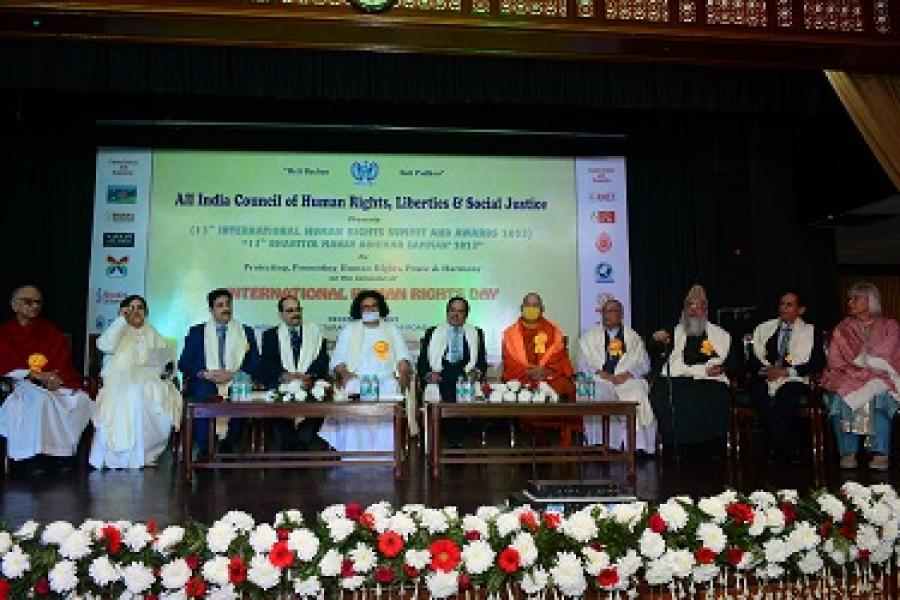
Press Release (Post)
Pictures of the 13th International Human Rights Awards 2023
https://www.flickr.com/photos/195603617@N06/
Event: 13th International Human Rights Summit & Awards 2023
December 10’2023 5.00 Pm
At India Islamic Cultural Center, Lodhi Road, New Delhi.
Event Coordinator: Dr. June Ann, Dr.Mustafa Attarwala, Mr. Tej Thapa, Dr. Deepankar Dass
Event Organised By All India Council of Human Rights, Liberties and Social Justice
In Association with Mahabodhi International Meditation Centre, Leh UT Ladakh, AAFT University, International Human Rights Advisory Council (IHRAC), Indian National Human Rights Protection Council, Indian National Press Representative Council, Board of Global Ambassador for Human Rights and Peace (GAHRP), National Council Of News & Broadcasting (NCNB), Asian Human Rights Council (AHRC) , Amnesty Worldwide (AW) , Universal Mission For Peace And Harmony (UMPH) And International Press and Broadcasting Association (INBA) & International Council for Environmental Protection, Conservation Of Forests And Other Natural Resources
The Awards were presented at a simple ceremony, has taken place in DELHI in the presence of galaxy of prominent, Members, dignitaries, guests from all the sectors i.e. Government officials from various states, Human Rights Commission, Social Activists, Religious Leaders, Social NGO, Foreign Diplomat, United Nation, Ministers, Member Of Parliament, IAS, IPS, Judiciary, Advocates, Sports, Film Industry, RWA, Journalists, Bureaucrats, Doctors, Engineers, Chartered Accountants, Law Colleges, Universities, School, etc. from all over India and Globally.
Amazing and min-blowing performance was done by Children from Tagore academy public school, Palwal
Manav Rachna International School, Faridabad, Sai Kiran Welfare Society, Delhi.
That All India Council of Human Rights, Liberties & Social Justice (AICHLS), is functioning with commitment to the Noble Cause of Human Rights Protection and Promotion, Justice for All, Economic Upliftment of the Underprivileged, Education, Love, Peace, Harmony and Friendship, National & International Integration by Exchange of Ideas & Ethos in India and also amongst the neighboring countries and the people of the rest of the World at large.
Prominent Presenters & Speakers
1. His Holiness Venerable Bhikkhu Sanghasena, Spiritual Director/Founder President, Mahabodhi International Meditation Centre, Leh (UT Ladakh)
2. His Holiness Acharya Dr. Lokesh Muni Ji
3. Major General (Dr.) Rajan Kochhar VSM (Retd)
4. Lt. General Ashok B. Shivane, PVSM, AVSM, VSM (Retd.)
5. Dr. Sandeep Marwah, Founder Marwah Studios and Chancellor AAFT University.
6. BK Dr. Binny Sareen
7. Most Rev. Bishop George Palliparambil.
8. Dr. Umer Ahmed Illyasi, Chief Imam and Hon’ble President, All India Imam Association, New Delhi.
9. Dr. Anthony Raju, Advocate Supreme Court of India, Global Chairman All India Council of Human Rights, Liberties and Social Justice, New Delhi.
10. Dr. June Ann Passanah, Global chairman of Amnesty Worlds Wide Movement for Women Rights, Chairperson (Women Wing) of all Indian Council of Human Rights.
Prominent Awardees 2023
9th Dr. APJ Abdul Kalam World Peace Award'2023
Archbishop Thomas Menamparampil, S.D.B.. Archbishop Emeritus of Guwahati
Eminent Chancellor Award 2023
Prof. (Dr.) Balvir S. Tomar, Chancellor NIMS University
Eminent Social Reformer
Dr. Rizwan Adatia
Dr. Amir Rashid Wani
Vivek Singh Rao
Ramankant Reddy A.
Dr. Depankar Das
International Women of Courage Award
Sabita Upreti, Nepal
Inthumathy Hariharathamotharan, Sri Lanka
Lori McFadyen
Manorma Arora
Dr. Gladise Monica
Eminent CSR Excellence Award
Meena Khanna
Eminent Peace Award
BK Rakesh Sareen
Eminent NGO Award
Shiksha Prayas, Gurgaon
Eminent Members who have supported the event with full dedication and team work
Dr. Jasbir Singh
Rohit Desai
Cmdr. Hukum Chand
Fr. Joshy Michael
Dr. Shiv Kumar Iyer
Dr. Moustafa Attarwal
Dr. Manoj Batra
Vishal Sharma
Dr. R Selvakumar
Adv. Rakesh Wadhwa
Tej Bahadur Thapa
Dr.M. Rajender Reddy
DR MD FAISAL ALAM
Amit Kumar sahu
Priyadarshini Das
Akarman Singh
Baldev Kumar B. Varma
Neelam Nigam
I Surender Singh
DR MD SHAHID
Rajesh Keith D'silva
Dr. Rupinder Singh
Sahib Khan
Dr. Rajesh Gupta
Dr. Kiran Reddy
Dr. G Ramesh Kumar
Dilip Kumar
Dr. K Kishore
Avanendra Pratap Sinh raaj
Kamal Hassan Muhamed
Gangadhar M
Dr. Zarine Manchanda
Ramashankar Jha
Kowsalya vasudevan
Vijay Vasant Dhumal
Nizarahamad Husen Kadegaonkar
Uday Rajaram Kumbhar
Manoj Tanwar, CA
Manish Tanwar Adv.
D. Anjali Christopher
Jainaam Rakesh Singhi
Adv. Rajat Baijal
Anandkumar B
Ravinder Sinha
Dr. G. Lakshmipathy
Firoz Ahmed Siddiqui
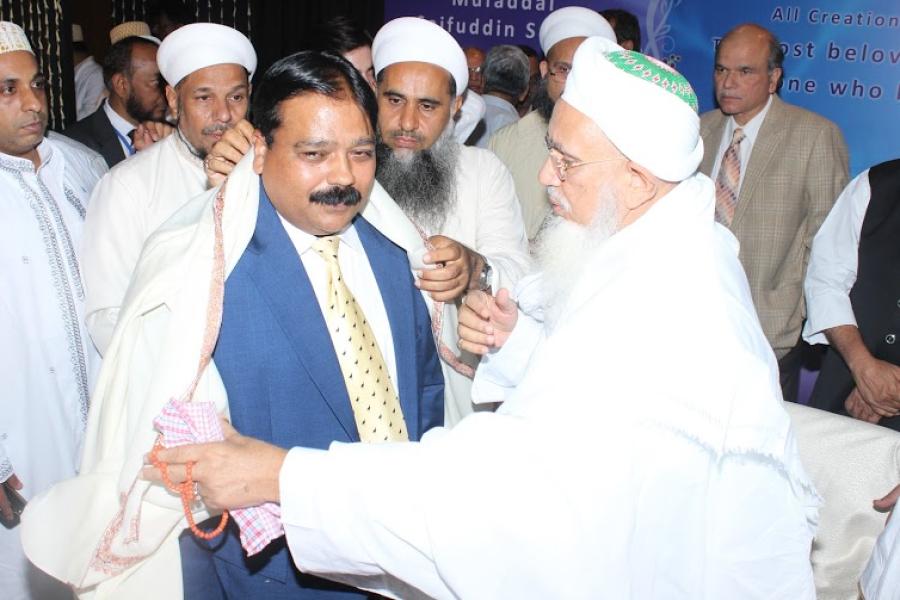
Dr. Anthony Raju - Advocate, Supreme Court of India, Dynamic Internationally Accredited Human Rights Defender, Inspirational, spiritual and motivational speaker, Peace Activist & Social Worker and is one of global's foremost voices of Human Rights and powerful voice for voiceless people globally.
ALL INDIA COUNCIL OF HUMAN RIGHTS, LIBERTIES & SOCIAL JUSTICE
(AICHLS) is founded by Dr. Anthony Raju - Advocate, Supreme Court of India, Dynamic Internationally Accredited Human Rights Defender, Inspirational, spiritual and motivational speaker, Peace Activist & Social Worker and is one of global's foremost voices of Human Rights and powerful voice for voiceless people globally.
All India council of human rights, liberties & social justice has been added as signatory to UNITED NATION GLOBAL COMPACT. The world's largest corporate responsibility initiative with nearly 12,000 business and non-business participants in 140 countries. That All India Council of Human Rights, Liberties & Social Justice (AICHLS), is a duly registered Society under the Societies Registration Act XXI of 1860, and is functioning with commitment to the Noble Cause of Human Rights Protection and Promotion, Justice for All, Economic Upliftment of the Underprivileged, Education, Love, Peace, Harmony and Friendship, National & International Integration by Exchange of Ideas & Ethos in India and also amongst the neighbouring countries and the people of the rest of the World at large.
Dr. Anthony Raju
Advocate , Supreme Court of India.
Global Chairman , All India Council of Human Rights, Liberties & Social Justice.
Chairman - National Legal Council
International Convener, Universal mission for Peace and Human Rights.
Chairman, National Council of News and Broadcasting.
Secretary General : Asian Human Rights Council
International Peace keeper
Dr. Anthony Raju - Advocate, Supreme Court of India and a dynamic, dedicated, Internationally accredited HUMAN RIGHTS, PEACE Ambassador & SOCIAL Worker and is one of Global's foremost voices of Human Rights.
Dr. Anthony Raju , who is an Internationally Reputed and Accredited PEACE BUILDER, HUMAN RIGHTS DEFENDER , Diplomat , an Eminent Social Reformer & Activist, Environmentalist, Educator, Human Rights & Constitutional Rights Activist, Motivator, Changemaker, Teacher Trainer, Disaster management Expert, Panel Arbitrator in National & International Level, Legal Aid Expert, Academician, Humanitarian works Expert, etc.
Dr. Anthony Raju has been awarded several National & International Awards for his Excellence work for more than 15 Years for promoting and protecting Human Rights. He has been awarded with several (Honoris Causa) Degrees , Like Doctor of Sociology , Doctorate of Human Rights by International Peace University , Germany, PHD. Social Work by Universal Academy for Global Peace , Life time membership and Award by International Journalism Centre , National Human Rights Activist Award by All India Newspaper Association , Ambassador of Peace Award by Blind Association, Peace Ambassador by Global Peace Initiative -USA
Dr. Anthony Raju had justified his position many times against the capital punishment , he has publicly condemned this barbaric act in name of punishment. He has written number of articles on Extra Judicial Killings, Violence Against Women, Right to Education, Rights to Information Contemporary forms of slavery , Right to an adequate Standard of living, Extrajudicial, summary of arbitrary executions , Sale of Children, Child prostitution , Independence of Judges and Lawyers.
Dr. Anthony Raju spends most of the time between Tribal , underprivileged , Villages , he widely travels in various States i.e Orissa , Chhattisgarh, Jharkhand , Bihar , Uttar Pradesh , Madhya Pradesh , Uttrakhand , Gujarat , Rajasthan etc.
MEMBERSHIP OPEN
JOIN THE TOP AND MOST REPUTED HUMAN RIGHTS MOVEMENT OF THE COUNTRY AND
RAISE YOUR VOICE FOR THE VOICELESS PEOPLE
Top Criminal Advocate
Top Human Rights Advocate
SPEAK BEFORE APPLY FOR THE MEMBERSHIP
For more details, visit below
9873005424, 9873087903
#dranthonyraju #tophumanrightsactivist #globalpeaceactivist #dranthonyrajuadvocate
https://www.flickr.com/people/anthonyraju/
https://www.flickr.com/photos/anthonyraju/
http://www.ihrac.org/
http://www.awardsforhumanrights.com/
https://www.newsindiatoday.co.in
http://www.ncnb.in/
https://www.linkedin.com/in/anthonyraju/
https://www.facebook.com/aichlsin
https://twitter.com/aichls
http://www.anthonyraju.com/
http://www.juneann.in/
https://plus.google.com/u/1/?tab=mX
https://www.youtube.com/user/TheHumanrightsindia/
http://www.xavierinstitutions.org/
www.asianhumanrightscouncil.org
www.internationalhumanrightscouncil.org
www.indianpresstrust.com
www.groundreports.in
======================================================
#dranthonyraju #drjuneann #drtessmartin #drameenaali #aparathapa, #sandeepmarwah, #Tophumanrightscouncil, #Humanrightsinindia #Socialjustice, #freelegalhelp #HumanRightsOrganizationsInIndia, #HumanRightsComplaint, #HumanRights, #AdvocateSupremeCourt #HumanRightsMembership ##TopHumanRightsOrganisationofIndia #peace #gahrc #humanrightseducation #humanrightsleadership #humanitarian #ihrac #dranthonyrajutopcriminaladvocate #aichls #ncnb #humanrightsambassador #tophumanrightsactivistofindia #motivationalspeaker #inspirationalspeaker #nhrc #tophumanrightsadvocateof india #topcriminaladvocate #nationalhumanrightscommission #topcriminaladvocatesupremecourtofindia #majorgeneralrajankochhar #drmoustaffaattarwala ##frjoshymichael
"Human Rights In India, Social Justice, Human Rights Commission, National Human Rights Commission, Human Rights Organizations In India, State Human Rights Commission, Human Rights Commission Delhi, Human Rights Complaint, Human Rights, Advocate Supreme Court, Human Rights Membership, Top Human Rights Organisation of India" "Human Rights In India, Dr. Anthony Raju Advocate Supreme Court, Human Rights Membership, Top Human Rights Organisation of India"
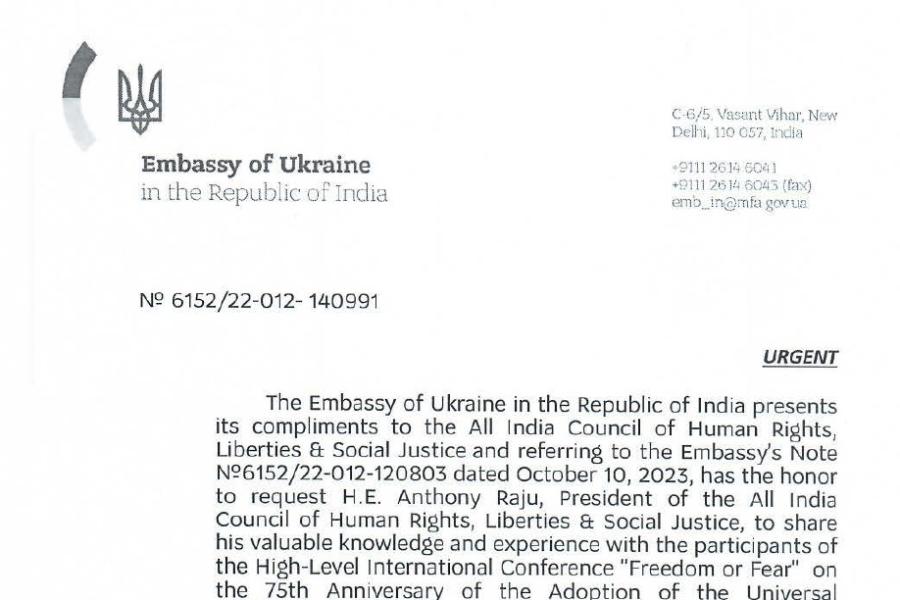
H.E. Dr. Anthony Raju has been invited by Ukraine as a Panelist
to share his valuable knowledge and experience with the participants of the high-level International Conference" Freedom or Fear" on the 75th Anniversary of the adoption of the Universal Declaration of Human Rights (UDHR) that will be held in Kyiv Ukraine.
SPEAK BEFORE APPLY FOR THE MEMBERSHIP
For more details, visit below
9873005424, 9873087903
https://humanrightscouncil.in/
https://humanrightscouncil.in/membership-form-download.php
https://www.hrcin.org/membership-form.html
http://ihrac.org/membership-form-download.php
https://hrcin.org/
http://ihrac.org/
https://twitter.com/AdvAnthonyRaju
Email: Office@humanrightscouncil.in
ALL INDIA COUNCIL OF HUMAN RIGHTS, LIBERTIES & SOCIAL JUSTICE
(AICHLS) is founded by Dr. Anthony Raju - Advocate, Supreme Court of India, Dynamic Internationally Accredited Human Rights Defender, Inspirational, spiritual and motivational speaker, Peace Activist & Social Worker and is one of global's foremost voices of Human Rights and powerful voice for voiceless people globally.
All India council of human rights, liberties & social justice has been added as signatory to UNITED NATION GLOBAL COMPACT. The world's largest corporate responsibility initiative with nearly 12,000 business and non-business participants in 140 countries. That All India Council of Human Rights, Liberties & Social Justice (AICHLS), is a duly registered Society under the Societies Registration Act XXI of 1860, and is functioning with commitment to the Noble Cause of Human Rights Protection and Promotion, Justice for All, Economic Upliftment of the Underprivileged, Education, Love, Peace, Harmony and Friendship, National & International Integration by Exchange of Ideas & Ethos in India and also amongst the neighbouring countries and the people of the rest of the World at large.
Dr. Anthony Raju
Advocate , Supreme Court of India.
Global Chairman , All India Council of Human Rights, Liberties & Social Justice.
Chairman - National Legal Council
International Convener, Universal mission for Peace and Human Rights.
Chairman, National Council of News and Broadcasting.
Secretary General : Asian Human Rights Council
International Peace keeper
Dr. Anthony Raju - Advocate, Supreme Court of India and a dynamic, dedicated, Internationally accredited HUMAN RIGHTS, PEACE Ambassador & SOCIAL Worker and is one of Global's foremost voices of Human Rights.
Dr. Anthony Raju , who is an Internationally Reputed and Accredited PEACE BUILDER, HUMAN RIGHTS DEFENDER , Diplomat , an Eminent Social Reformer & Activist, Environmentalist, Educator, Human Rights & Constitutional Rights Activist, Motivator, Changemaker, Teacher Trainer, Disaster management Expert, Panel Arbitrator in National & International Level, Legal Aid Expert, Academician, Humanitarian works Expert, etc.
Dr. Anthony Raju has been awarded several National & International Awards for his Excellence work for more than 15 Years for promoting and protecting Human Rights. He has been awarded with several (Honoris Causa) Degrees , Like Doctor of Sociology , Doctorate of Human Rights by International Peace University , Germany, PHD. Social Work by Universal Academy for Global Peace , Life time membership and Award by International Journalism Centre , National Human Rights Activist Award by All India Newspaper Association , Ambassador of Peace Award by Blind Association, Peace Ambassador by Global Peace Initiative -USA
Dr. Anthony Raju had justified his position many times against the capital punishment , he has publicly condemned this barbaric act in name of punishment. He has written number of articles on Extra Judicial Killings, Violence Against Women, Right to Education, Rights to Information Contemporary forms of slavery , Right to an adequate Standard of living, Extrajudicial, summary of arbitrary executions , Sale of Children, Child prostitution , Independence of Judges and Lawyers.
Dr. Anthony Raju spends most of the time between Tribal , underprivileged , Villages , he widely travels in various States i.e Orissa , Chhattisgarh, Jharkhand , Bihar , Uttar Pradesh , Madhya Pradesh , Uttrakhand , Gujarat , Rajasthan etc.
#dranthonyraju #tophumanrightsactivist #globalpeaceactivist #dranthonyrajuadvocate
https://www.flickr.com/people/anthonyraju/
https://www.flickr.com/photos/anthonyraju/
http://www.ihrac.org/
http://www.awardsforhumanrights.com/
https://www.newsindiatoday.co.in
http://www.ncnb.in/
https://www.linkedin.com/in/anthonyraju/
https://www.facebook.com/aichlsin
https://twitter.com/aichls
http://www.anthonyraju.com/
http://www.juneann.in/
https://plus.google.com/u/1/?tab=mX
https://www.youtube.com/user/TheHumanrightsindia/
http://www.xavierinstitutions.org/
www.asianhumanrightscouncil.org
www.internationalhumanrightscouncil.org
www.indianpresstrust.com
www.groundreports.in
======================================================
#dranthonyraju #drjuneann #drtessmartin #drameenaali #aparathapa, #sandeepmarwah, #Tophumanrightscouncil, #Humanrightsinindia #Socialjustice, #freelegalhelp #HumanRightsOrganizationsInIndia, #HumanRightsComplaint, #HumanRights, #AdvocateSupremeCourt #HumanRightsMembership ##TopHumanRightsOrganisationofIndia #peace #gahrc #humanrightseducation #humanrightsleadership #humanitarian #ihrac #dranthonyrajutopcriminaladvocate #aichls #ncnb #humanrightsambassador #tophumanrightsactivistofindia #motivationalspeaker #inspirationalspeaker #nhrc #tophumanrightsadvocateof india #topcriminaladvocate #nationalhumanrightscommission #topcriminaladvocatesupremecourtofindia #majorgeneralrajankochhar #drmoustaffaattarwala ##frjoshymichael
"Human Rights In India, Social Justice, Human Rights Commission, National Human Rights Commission, Human Rights Organizations In India, State Human Rights Commission, Human Rights Commission Delhi, Human Rights Complaint, Human Rights, Advocate Supreme Court, Human Rights Membership, Top Human Rights Organisation of India" "Human Rights In India, Dr. Anthony Raju Advocate Supreme Court, Human Rights Membership, Top Human Rights Organisation of India"
In Public Interest, More Links Of Human Rights/Government Organisation working for the promotion and protection of Human Rights. Legal Aid in India.
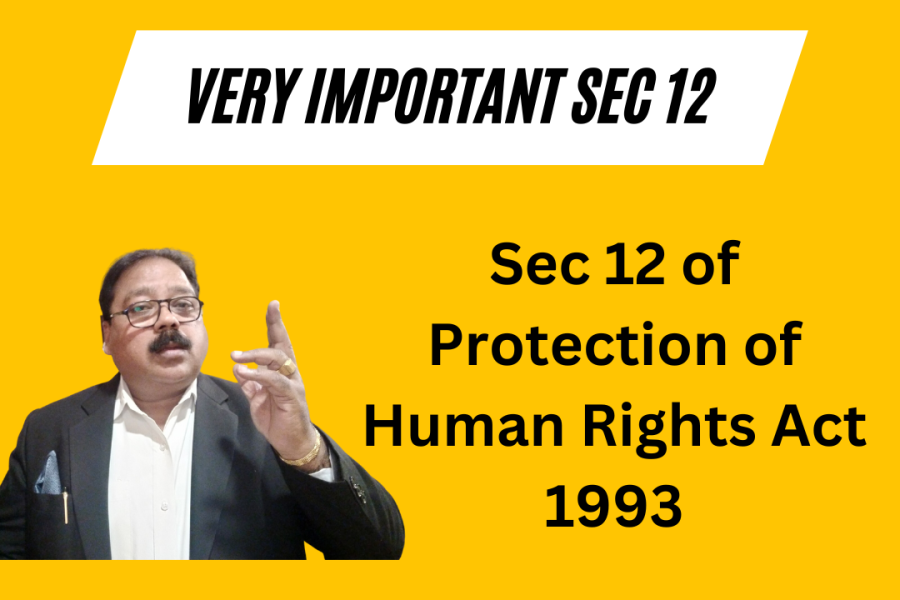
A very important section 12 of the Protection of Human Rights Act, 1993
As per Section 12 of the Act, the functions and powers of the National Human Rights Commission are as follows:
NHRC can investigate any complaints related to violations of Human Rights or negligence in the prevention of such violations by a public servant; either suo-moto or after receiving a petition.
NHRC can interfere in any judicial process involving any allegation of human rights violation.
It has the authority to visit any prison or institute under the control of the state governments to observe the living conditions of inmates. It can also make recommendations to the authorities based on its observations.
NHRC can examine the articles of the Constitution that protect human rights and make recommendations for punitive measures.
Examine the causes that obstruct the enjoyment of human rights, including acts of terrorism, and make recommendations for proper remedies.
Study human rights treaties and other international instruments and make suggestions for their effective implementation.
The Committee undertakes and promotes research in the field of human rights.
Human Rights Literacy and awareness of the safeguards available for the protection of these rights are promoted by NHRC in various sectors of society through different media, seminars, publications, etc.
Encourage non-governmental organizations and institutions that work in the field of human rights;
The National Commission for Human Rights may perform any other function that it considers necessary for the promotion of human rights.
सदस्यता खुली
देश के शीर्ष और सर्वाधिक प्रतिष्ठित मानवाधिकार आंदोलन से जुड़ें और
बेजुबान लोगों के लिए अपनी आवाज उठाएं
MEMBERSHIP OPEN
JOIN THE TOP AND MOST REPUTED HUMAN RIGHTS MOVEMENT OF THE COUNTRY AND
RAISE YOUR VOICE FOR THE VOICELESS PEOPLE
Top Criminal Advocate
Top Human Rights Advocate
SPEAK BEFORE APPLY FOR THE MEMBERSHIP
For more details, visit below
9873005424, 9873087903
https://humanrightscouncil.in/
https://humanrightscouncil.in/membership-form-download.php
https://www.hrcin.org/membership-form.html
http://ihrac.org/membership-form-download.php
https://hrcin.org/
http://ihrac.org/
https://twitter.com/AdvAnthonyRaju
Email: Office@humanrightscouncil.in
ALL INDIA COUNCIL OF HUMAN RIGHTS, LIBERTIES & SOCIAL JUSTICE
(AICHLS) is founded by Dr. Anthony Raju - Advocate, Supreme Court of India, Dynamic Internationally Accredited Human Rights Defender, Inspirational, spiritual and motivational speaker, Peace Activist & Social Worker and is one of global's foremost voices of Human Rights and powerful voice for voiceless people globally.
All India council of human rights, liberties & social justice has been added as signatory to UNITED NATION GLOBAL COMPACT. The world's largest corporate responsibility initiative with nearly 12,000 business and non-business participants in 140 countries. That All India Council of Human Rights, Liberties & Social Justice (AICHLS), is a duly registered Society under the Societies Registration Act XXI of 1860, and is functioning with commitment to the Noble Cause of Human Rights Protection and Promotion, Justice for All, Economic Upliftment of the Underprivileged, Education, Love, Peace, Harmony and Friendship, National & International Integration by Exchange of Ideas & Ethos in India and also amongst the neighbouring countries and the people of the rest of the World at large.
Dr. Anthony Raju
Advocate , Supreme Court of India.
Global Chairman , All India Council of Human Rights, Liberties & Social Justice.
Chairman - National Legal Council
International Convener, Universal mission for Peace and Human Rights.
Chairman, National Council of News and Broadcasting.
Secretary General : Asian Human Rights Council
International Peace keeper
Dr. Anthony Raju - Advocate, Supreme Court of India and a dynamic, dedicated, Internationally accredited HUMAN RIGHTS, PEACE Ambassador & SOCIAL Worker and is one of Global's foremost voices of Human Rights.
Dr. Anthony Raju , who is an Internationally Reputed and Accredited PEACE BUILDER, HUMAN RIGHTS DEFENDER , Diplomat , an Eminent Social Reformer & Activist, Environmentalist, Educator, Human Rights & Constitutional Rights Activist, Motivator, Changemaker, Teacher Trainer, Disaster management Expert, Panel Arbitrator in National & International Level, Legal Aid Expert, Academician, Humanitarian works Expert, etc.
Dr. Anthony Raju has been awarded several National & International Awards for his Excellence work for more than 15 Years for promoting and protecting Human Rights. He has been awarded with several (Honoris Causa) Degrees , Like Doctor of Sociology , Doctorate of Human Rights by International Peace University , Germany, PHD. Social Work by Universal Academy for Global Peace , Life time membership and Award by International Journalism Centre , National Human Rights Activist Award by All India Newspaper Association , Ambassador of Peace Award by Blind Association, Peace Ambassador by Global Peace Initiative -USA
Dr. Anthony Raju had justified his position many times against the capital punishment , he has publicly condemned this barbaric act in name of punishment. He has written number of articles on Extra Judicial Killings, Violence Against Women, Right to Education, Rights to Information Contemporary forms of slavery , Right to an adequate Standard of living, Extrajudicial, summary of arbitrary executions , Sale of Children, Child prostitution , Independence of Judges and Lawyers.
Dr. Anthony Raju spends most of the time between Tribal , underprivileged , Villages , he widely travels in various States i.e Orissa , Chhattisgarh, Jharkhand , Bihar , Uttar Pradesh , Madhya Pradesh , Uttrakhand , Gujarat , Rajasthan etc.
#dranthonyraju #tophumanrightsactivist #globalpeaceactivist #dranthonyrajuadvocate
https://www.flickr.com/people/anthonyraju/
https://www.flickr.com/photos/anthonyraju/
http://www.ihrac.org/
http://www.awardsforhumanrights.com/
https://www.newsindiatoday.co.in
http://www.ncnb.in/
https://www.linkedin.com/in/anthonyraju/
https://www.facebook.com/aichlsin
https://twitter.com/aichls
http://www.anthonyraju.com/
http://www.juneann.in/
https://plus.google.com/u/1/?tab=mX
https://www.youtube.com/user/TheHumanrightsindia/
http://www.xavierinstitutions.org/
www.asianhumanrightscouncil.org
www.internationalhumanrightscouncil.org
www.indianpresstrust.com
www.groundreports.in
======================================================
#dranthonyraju #drjuneann #drtessmartin #drameenaali #aparathapa, #sandeepmarwah, #Tophumanrightscouncil, #Humanrightsinindia #Socialjustice, #freelegalhelp #HumanRightsOrganizationsInIndia, #HumanRightsComplaint, #HumanRights, #AdvocateSupremeCourt #HumanRightsMembership ##TopHumanRightsOrganisationofIndia #peace #gahrc #humanrightseducation #humanrightsleadership #humanitarian #ihrac #dranthonyrajutopcriminaladvocate #aichls #ncnb #humanrightsambassador #tophumanrightsactivistofindia #motivationalspeaker #inspirationalspeaker #nhrc #tophumanrightsadvocateof india #topcriminaladvocate #nationalhumanrightscommission #topcriminaladvocatesupremecourtofindia #majorgeneralrajankochhar #drmoustaffaattarwala ##frjoshymichael
"Human Rights In India, Social Justice, Human Rights Commission, National Human Rights Commission, Human Rights Organizations In India, State Human Rights Commission, Human Rights Commission Delhi, Human Rights Complaint, Human Rights, Advocate Supreme Court, Human Rights Membership, Top Human Rights Organisation of India" "Human Rights In India, Dr. Anthony Raju Advocate Supreme Court, Human Rights Membership, Top Human Rights Organisation of India"
In Public Interest, More Links Of Human Rights/Government Organisation working for the promotion and protection of Human Rights. Legal Aid in India.
https://nhrc.nic.in/
https://nhrc.nic.in/about-us/state-commission?term_node_tid_depth=2350
https://nhrc.nic.in/statecommission/andhra-pradesh-state-human-rights-commission
https://shrc.tn.gov.in/
https://kshrc.karnataka.gov.in/english
https://nhrc.nic.in/statecommission/maharashtra-state-human-rights-commission
http://uphrc.up.nic.in/
https://ukhrc.net/u/
http://bhrc.bihar.gov.in/
http://www.pshrc.net/Home/Contact
https://nhrc.nic.in/statecommission/punjab-human-rights-commission
https://nhrc.nic.in/statecommission/gujarat-human-rights-commission
https://hphrc.hp.gov.in/
https://nhrc.nic.in/statecommission/goa-human-rights-commission
https://dpar.nagaland.gov.in/setting-up-of-nagaland-state-human-rights-commission/
https://nhrc.nic.in/statecommission/manipur-state-human-rights-commission
https://nhrc.nic.in/statecommission/meghalaya-human-rights-commission
https://homeandpolitical.assam.gov.in/frontimpotentdata/assam-human-rights-commission
http://wbhrc.nic.in/
http://sshrc.nic.in/
http://www.arunachalpradesh.gov.in/setting-up-of-the-arunachal-pradesh-state-human-rights-commission-apshrc/
https://rshrc.rajasthan.gov.in/
https://main.sci.gov.in/legal-aid
top 10 criminal law firms in india
top criminal law firms in india
top 10 criminal lawyers in mumbai
famous criminal lawyers
top criminal lawyers in mumbai
best criminal lawyer in world
best criminal lawyer in supreme court
top female criminal lawyers in india
LEGAL AND LEGAL Associates
डॉ. एंथोनी राजू सबसे बेहतरीन और प्रतिभाशाली आपराधिक अधिवक्ताओं और प्रसिद्ध मानवाधिकार कार्यकर्ताओं में से एक हैं, उन्होंने बहुत ही शानदार ढंग से हजारों लोगों को अन्याय के खिलाफ लड़ने में मदद की है और असहाय, गरीब लोगों के लिए आवाज उठाई है। आज वह देश का जाना-माना और बेहद प्रतिष्ठित चेहरा हैं, जो गरीबों और असहाय लोगों के लिए जीवन समर्पित है। वह मीडिया का चकाचौंध चेहरा नहीं है, वह दीवार के पीछे काम करता है।
उन्होंने विश्व स्तर पर मानवाधिकार और शांति को बढ़ावा देने के लिए सैकड़ों संगठनों की स्थापना की है।
शांति, सद्भाव और मानवाधिकारों को बढ़ावा देने के लिए उनके कार्यों के लिए उन्हें राष्ट्रीय और अंतर्राष्ट्रीय स्तर पर कई पुरस्कारों से सम्मानित किया गया है।
Dr. Anthony Raju is one of the finest and most brilliant criminal advocates and well-known Human Rights Activist, he has very brilliantly helped thousands of people fight against injustice and raised voices for helpless, poor people. Today he is the well-known and very reputed face in the country, dedicated to life for the poor and helpless people. he is not a media glare face, he works behind the wall.
He has founded hundreds of organizations to promote Human Rights and Peace globally.
He has been awarded several awards Nationally and Internationally for his work for Peace, harmony, and promoting Human Rights.
========
सदस्यता खुली
देश के शीर्ष और सर्वाधिक प्रतिष्ठित मानवाधिकार आंदोलन से जुड़ें और
बेजुबान लोगों के लिए अपनी आवाज उठाएं
MEMBERSHIP OPEN
JOIN THE TOP AND MOST REPUTED HUMAN RIGHTS MOVEMENT OF THE COUNTRY AND
RAISE YOUR VOICE FOR THE VOICELESS PEOPLE
Top Criminal Advocate
Top Human Rights Advocate
SPEAK BEFORE APPLY FOR THE MEMBERSHIP
For more details, visit below
9873005424, 9873087903
https://humanrightscouncil.in/
https://humanrightscouncil.in/membership-form-download.php
https://www.hrcin.org/membership-form.html
http://ihrac.org/membership-form-download.php
https://hrcin.org/
http://ihrac.org/
https://twitter.com/AdvAnthonyRaju
Email: Office@humanrightscouncil.in
ALL INDIA COUNCIL OF HUMAN RIGHTS, LIBERTIES & SOCIAL JUSTICE
(AICHLS) is founded by Dr. Anthony Raju - Advocate, Supreme Court of India, Dynamic Internationally Accredited Human Rights Defender, Inspirational, spiritual and motivational speaker, Peace Activist & Social Worker and is one of global's foremost voices of Human Rights and powerful voice for voiceless people globally.
All India council of human rights, liberties & social justice has been added as signatory to UNITED NATION GLOBAL COMPACT. The world's largest corporate responsibility initiative with nearly 12,000 business and non-business participants in 140 countries. That All India Council of Human Rights, Liberties & Social Justice (AICHLS), is a duly registered Society under the Societies Registration Act XXI of 1860, and is functioning with commitment to the Noble Cause of Human Rights Protection and Promotion, Justice for All, Economic Upliftment of the Underprivileged, Education, Love, Peace, Harmony and Friendship, National & International Integration by Exchange of Ideas & Ethos in India and also amongst the neighbouring countries and the people of the rest of the World at large.
Dr. Anthony Raju
Advocate , Supreme Court of India.
Global Chairman , All India Council of Human Rights, Liberties & Social Justice.
Chairman - National Legal Council
International Convener, Universal mission for Peace and Human Rights.
Chairman, National Council of News and Broadcasting.
Secretary General : Asian Human Rights Council
International Peace keeper
Dr. Anthony Raju - Advocate, Supreme Court of India and a dynamic, dedicated, Internationally accredited HUMAN RIGHTS, PEACE Ambassador & SOCIAL Worker and is one of Global's foremost voices of Human Rights.
Dr. Anthony Raju , who is an Internationally Reputed and Accredited PEACE BUILDER, HUMAN RIGHTS DEFENDER , Diplomat , an Eminent Social Reformer & Activist, Environmentalist, Educator, Human Rights & Constitutional Rights Activist, Motivator, Changemaker, Teacher Trainer, Disaster management Expert, Panel Arbitrator in National & International Level, Legal Aid Expert, Academician, Humanitarian works Expert, etc.
Dr. Anthony Raju has been awarded several National & International Awards for his Excellence work for more than 15 Years for promoting and protecting Human Rights. He has been awarded with several (Honoris Causa) Degrees , Like Doctor of Sociology , Doctorate of Human Rights by International Peace University , Germany, PHD. Social Work by Universal Academy for Global Peace , Life time membership and Award by International Journalism Centre , National Human Rights Activist Award by All India Newspaper Association , Ambassador of Peace Award by Blind Association, Peace Ambassador by Global Peace Initiative -USA
Dr. Anthony Raju had justified his position many times against the capital punishment , he has publicly condemned this barbaric act in name of punishment. He has written number of articles on Extra Judicial Killings, Violence Against Women, Right to Education, Rights to Information Contemporary forms of slavery , Right to an adequate Standard of living, Extrajudicial, summary of arbitrary executions , Sale of Children, Child prostitution , Independence of Judges and Lawyers.
Dr. Anthony Raju spends most of the time between Tribal , underprivileged , Villages , he widely travels in various States i.e Orissa , Chhattisgarh, Jharkhand , Bihar , Uttar Pradesh , Madhya Pradesh , Uttrakhand , Gujarat , Rajasthan etc.
#dranthonyraju #tophumanrightsactivist #globalpeaceactivist #dranthonyrajuadvocate
https://www.flickr.com/people/anthonyraju/
https://www.flickr.com/photos/anthonyraju/
http://www.ihrac.org/
http://www.awardsforhumanrights.com/
https://www.newsindiatoday.co.in
http://www.ncnb.in/
https://www.linkedin.com/in/anthonyraju/
https://www.facebook.com/aichlsin
https://twitter.com/aichls
http://www.anthonyraju.com/
http://www.juneann.in/
https://plus.google.com/u/1/?tab=mX
https://www.youtube.com/user/TheHumanrightsindia/
http://www.xavierinstitutions.org/
www.asianhumanrightscouncil.org
www.internationalhumanrightscouncil.org
www.indianpresstrust.com
www.groundreports.in
======================================================
#dranthonyraju #drjuneann #drtessmartin #drameenaali #aparathapa, #sandeepmarwah, #Tophumanrightscouncil, #Humanrightsinindia #Socialjustice, #freelegalhelp #HumanRightsOrganizationsInIndia, #HumanRightsComplaint, #HumanRights, #AdvocateSupremeCourt #HumanRightsMembership ##TopHumanRightsOrganisationofIndia #peace #gahrc #humanrightseducation #humanrightsleadership #humanitarian #ihrac #dranthonyrajutopcriminaladvocate #aichls #ncnb #humanrightsambassador #tophumanrightsactivistofindia #motivationalspeaker #inspirationalspeaker #nhrc #tophumanrightsadvocateof india #topcriminaladvocate #nationalhumanrightscommission #topcriminaladvocatesupremecourtofindia #majorgeneralrajankochhar #drmoustaffaattarwala ##frjoshymichael
"Human Rights In India, Social Justice, Human Rights Commission, National Human Rights Commission, Human Rights Organizations In India, State Human Rights Commission, Human Rights Commission Delhi, Human Rights Complaint, Human Rights, Advocate Supreme Court, Human Rights Membership, Top Human Rights Organisation of India" "Human Rights In India, Dr. Anthony Raju Advocate Supreme Court, Human Rights Membership, Top Human Rights Organisation of India"
In Public Interest, More Links Of Human Rights/Government Organisation working for the promotion and protection of Human Rights. Legal Aid in India.
https://nhrc.nic.in/
https://nhrc.nic.in/about-us/state-commission?term_node_tid_depth=2350
https://nhrc.nic.in/statecommission/andhra-pradesh-state-human-rights-commission
https://shrc.tn.gov.in/
https://kshrc.karnataka.gov.in/english
https://nhrc.nic.in/statecommission/maharashtra-state-human-rights-commission
http://uphrc.up.nic.in/
https://ukhrc.net/u/
http://bhrc.bihar.gov.in/
http://www.pshrc.net/Home/Contact
https://nhrc.nic.in/statecommission/punjab-human-rights-commission
https://nhrc.nic.in/statecommission/gujarat-human-rights-commission
https://hphrc.hp.gov.in/
https://nhrc.nic.in/statecommission/goa-human-rights-commission
https://dpar.nagaland.gov.in/setting-up-of-nagaland-state-human-rights-commission/
https://nhrc.nic.in/statecommission/manipur-state-human-rights-commission
https://nhrc.nic.in/statecommission/meghalaya-human-rights-commission
https://homeandpolitical.assam.gov.in/frontimpotentdata/assam-human-rights-commission
http://wbhrc.nic.in/
http://sshrc.nic.in/
http://www.arunachalpradesh.gov.in/setting-up-of-the-arunachal-pradesh-state-human-rights-commission-apshrc/
https://rshrc.rajasthan.gov.in/
https://main.sci.gov.in/legal-aid
top 10 criminal law firms in india
top criminal law firms in india
top 10 criminal lawyers in mumbai
famous criminal lawyers
top criminal lawyers in mumbai
best criminal lawyer in world
best criminal lawyer in supreme court
top female criminal lawyers in india
LEGAL AND LEGAL Associates
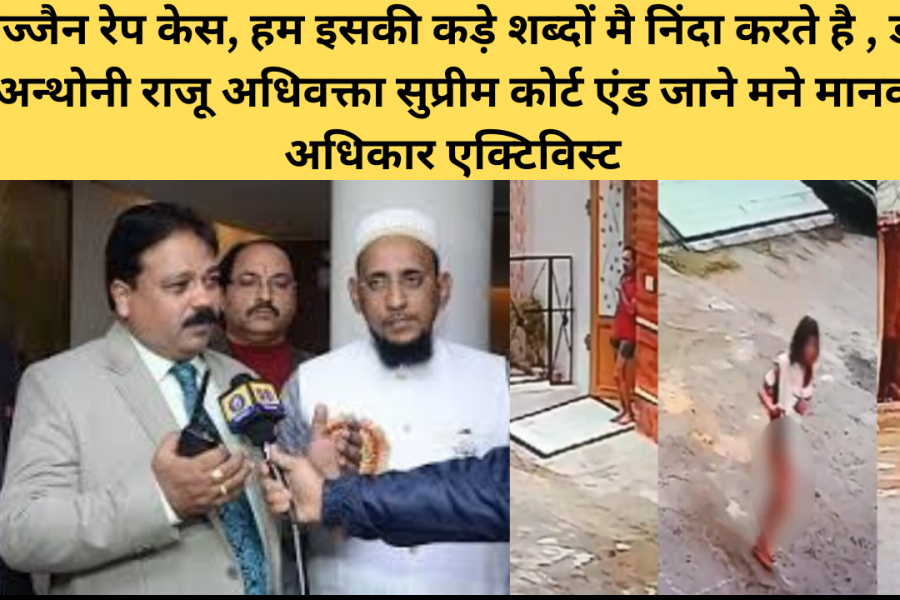
उज्जैन रेप केस, हम इसकी कड़े शब्दों मै निंदा करते है , डॉ अन्थोनी राजू अधिवक्ता सुप्रीम कोर्ट एंड जाने मने मानव अधिकार एक्टिविस्ट 9873005424
कब तक हमारी बहन बेटिओ का साथ ऐसा होता रहेगा, इन दरिंदो को बहुल ही जल्द सज़ा होनी चाहिए , मेरी सिर्फ सरकार यही गुजारिश है.
अन्याय अत्याचार के खिलाफ आवाज़ उठाये अवं एकजुट हो कर देश की माँ बहनो की इज्जत को बचाये।
12 साल की लड़की लुहलुहान लड़की सड़कों में भागती रही. खून से सनी अर्धनग्न लड़की लगभग ढाई घंटे भटकती रही. वह पूरे 8 किलोमीटर तक दौड़ती रही. जिससे मिले उससे हाथ जोड़कर बोलती कोई मेरे पीछे पड़ा है. मासूम के साथ रेप हुआ है. हैवानियत की सारी हदें पर कर दी है दरिंदों ने. लड़की के प्राइवेट पार्ट से लगातार खून बह रहा है. लड़की दरिंदों से जान बचाकर भागी. गंभीर हालत में अस्पताल में भर्ती कराया गया है. जहां उसे ब्लड चढ़ाया जा रहा है. लड़की डरी सहमी है. बोलने की हालत में नहीं है. पूछताछ में इतना बताया कि मां के साथ भी गलत काम हुआ है. लड़की प्रयागराज की बताई का रही है. भगवान महाकाल की नगरी उज्जैन में हुए इस पाप के आरोपियों को ढूँढने में पुलिस जुटी है. जांच टीमें गठित कर दी गई हैं. लड़की के माँ को ढूंढ़ा जा रहा है. #Ujjain #dranthonyraju #aichls
==
Strongly condemned, India Council of Human Rights highly condemn this horrific incident, shocking for the country. Said Dr. Anthony Raju Advocate Supreme Court, 9873005424
For how long will this continue to happen to our sisters and daughters, these scoundrels should be punished very soon, this is my only request to the government.
Raise your voice against injustice and atrocities and unite and save the honor of the mothers and sisters of the country.
The 12 year old girl kept running in the streets bleeding. The half-naked girl, soaked in blood, kept wandering for about two and a half hours. She kept running for the entire 8 kilometers. She would fold hands with anyone she met and say, "Someone is after me." An innocent child has been raped. The brutes have crossed all limits of brutality. There is continuous bleeding from the girl's private parts. The girl ran away to save her life from the criminals. He has been admitted to the hospital in critical condition. Where he is being given blood transfusion. The girl is scared. Not in a position to speak. During interrogation it was told that wrongdoing had happened to the mother also. The girl is said to be from Prayagraj. The police is busy finding the accused of this sin that took place in Ujjain, the city of Lord Mahakal. Investigation teams have been formed. The girl's mother is being searched.
https://youtu.be/ZrmALb43bjg?si=K3sptgppwD8kPEw6
====
MEMBERSHIP OPEN FOR THIS GREAT MOVEMENT OF HUMAN RIGHTS, PLEASE JOIN.
अन्याय और अत्याचार के विरुद्ध सशक्त मानवाधिकार आंदोलन
आज ही शामिल हों
अखिल भारतीय मानव अधिकार, स्वतंत्रता और सामाजिक न्याय परिषद
+91 98730 05424 पर कॉल करें
JOIN THE TOP AND MOST REPUTED HUMAN RIGHTS MOVEMENT IN THE COUNTRY AND
RAISE YOUR VOICE FOR THE VOICELESS PEOPLE
मानवाधिकारों के इस महान आंदोलन के लिए सदस्यता खुली है, कृपया शामिल हों।
देश में शीर्ष और सबसे प्रतिष्ठित मानवाधिकार आंदोलन में शामिल हों और
बेजुबान लोगों के लिए अपनी आवाज उठाएं.
Top Criminal Advocate
Top Human Rights Advocate
==============================================
SPEAK BEFORE APPLYING FOR THE MEMBERSHIP
For more details, visit below
9873005424, 9873087903
https://humanrightscouncil.in/
https://humanrightscouncil.in/membership-form-download.php
https://www.hrcin.org/membership-form.html
http://ihrac.org/membership-form-download.php
https://hrcin.org/
http://ihrac.org/
https://twitter.com/AdvAnthonyRaju
Email: Office@humanrightscouncil.in
ALL INDIA COUNCIL OF HUMAN RIGHTS, LIBERTIES & SOCIAL JUSTICE
(AICHLS) is founded by Dr. Anthony Raju - Advocate, Supreme Court of India, Dynamic Internationally Accredited Human Rights Defender, Inspirational, spiritual and motivational speaker, Peace Activist & Social Worker and is one of global's foremost voices of Human Rights and powerful voice for voiceless people globally.
All India council of human rights, liberties & social justice has been added as signatory to UNITED NATION GLOBAL COMPACT. The world's largest corporate responsibility initiative with nearly 12,000 business and non-business participants in 140 countries. That All India Council of Human Rights, Liberties & Social Justice (AICHLS), is a duly registered Society under the Societies Registration Act XXI of 1860, and is functioning with commitment to the Noble Cause of Human Rights Protection and Promotion, Justice for All, Economic Upliftment of the Underprivileged, Education, Love, Peace, Harmony and Friendship, National & International Integration by Exchange of Ideas & Ethos in India and also amongst the neighbouring countries and the people of the rest of the World at large.
Dr. Anthony Raju
Advocate , Supreme Court of India.
Global Chairman , All India Council of Human Rights, Liberties & Social Justice.
Chairman - National Legal Council
International Convener, Universal mission for Peace and Human Rights.
Chairman, National Council of News and Broadcasting.
Secretary General : Asian Human Rights Council
International Peace keeper
Dr. Anthony Raju - Advocate, Supreme Court of India and a dynamic, dedicated, Internationally accredited HUMAN RIGHTS, PEACE Ambassador & SOCIAL Worker and is one of Global's foremost voices of Human Rights.
Dr. Anthony Raju , who is an Internationally Reputed and Accredited PEACE BUILDER, HUMAN RIGHTS DEFENDER , Diplomat , an Eminent Social Reformer & Activist, Environmentalist, Educator, Human Rights & Constitutional Rights Activist, Motivator, Changemaker, Teacher Trainer, Disaster management Expert, Panel Arbitrator in National & International Level, Legal Aid Expert, Academician, Humanitarian works Expert, etc.
Dr. Anthony Raju has been awarded several National & International Awards for his Excellence work for more than 15 Years for promoting and protecting Human Rights. He has been awarded with several (Honoris Causa) Degrees , Like Doctor of Sociology , Doctorate of Human Rights by International Peace University , Germany, PHD. Social Work by Universal Academy for Global Peace , Life time membership and Award by International Journalism Centre , National Human Rights Activist Award by All India Newspaper Association , Ambassador of Peace Award by Blind Association, Peace Ambassador by Global Peace Initiative -USA
Dr. Anthony Raju had justified his position many times against the capital punishment , he has publicly condemned this barbaric act in name of punishment. He has written number of articles on Extra Judicial Killings, Violence Against Women, Right to Education, Rights to Information Contemporary forms of slavery , Right to an adequate Standard of living, Extrajudicial, summary of arbitrary executions , Sale of Children, Child prostitution , Independence of Judges and Lawyers.
Dr. Anthony Raju spends most of the time between Tribal , underprivileged , Villages , he widely travels in various States i.e Orissa , Chhattisgarh, Jharkhand , Bihar , Uttar Pradesh , Madhya Pradesh , Uttrakhand , Gujarat , Rajasthan etc.
https://www.flickr.com/people/anthonyraju/
https://www.flickr.com/photos/anthonyraju/
http://www.ihrac.org/
http://www.awardsforhumanrights.com/
https://www.newsindiatoday.co.in
http://www.ncnb.in/
https://www.linkedin.com/in/anthonyraju/
https://www.facebook.com/aichlsin
https://twitter.com/aichls
http://www.anthonyraju.com/
http://www.juneann.in/
https://plus.google.com/u/1/?tab=mX
https://www.youtube.com/user/TheHumanrightsindia/
http://www.xavierinstitutions.org/
www.asianhumanrightscouncil.org
www.internationalhumanrightscouncil.org
www.groundreports.in
======================================================
#dranthonyraju #drjuneann #drtessmartin #drameenaali #aparathapa, #sandeepmarwah, #Tophumanrightscouncil, #Humanrightsinindia #Socialjustice, #freelegalhelp #HumanRightsOrganizationsInIndia, #HumanRightsComplaint, #HumanRights, #AdvocateSupremeCourt #HumanRightsMembership ##TopHumanRightsOrganisationofIndia #peace #gahrc #humanrightseducation #humanrightsleadership #humanitarian #ihrac #dranthonyraju #aichls #humanrightsambassador #tophumanrightsactivistofindia #motivationalspeaker #inspirationalspeaker #nhrc #tophumanrightsadvocateof india #topcriminaladvocate #nationalhumanrightscommission #topcriminaladvocatesupremecourtofindia
"Human Rights In India, Social Justice, Human Rights Commission, National Human Rights Commission, Human Rights Organizations In India, State Human Rights Commission, Human Rights Commission Delhi, Human Rights Complaint, Human Rights, Advocate Supreme Court, Human Rights Membership, Top Human Rights Organisation of India" "Human Rights In India, Dr. Anthony Raju Advocate Supreme Court, Human Rights Membership, Top Human Rights Organisation of India"
In Public Interest, More Links Of Human Rights/Government Organisation working for the promotion and protection of Human Rights. Legal Aid in India.
https://nhrc.nic.in/
https://nhrc.nic.in/about-us/state-commission?term_node_tid_depth=2350
https://nhrc.nic.in/statecommission/andhra-pradesh-state-human-rights-commission
https://shrc.tn.gov.in/
https://kshrc.karnataka.gov.in/english
https://nhrc.nic.in/statecommission/maharashtra-state-human-rights-commission
http://uphrc.up.nic.in/
https://ukhrc.net/u/
http://bhrc.bihar.gov.in/
http://www.pshrc.net/Home/Contact
https://nhrc.nic.in/statecommission/punjab-human-rights-commission
https://nhrc.nic.in/statecommission/gujarat-human-rights-commission
https://hphrc.hp.gov.in/
https://nhrc.nic.in/statecommission/goa-human-rights-commission
https://dpar.nagaland.gov.in/setting-up-of-nagaland-state-human-rights-commission/
https://nhrc.nic.in/statecommission/manipur-state-human-rights-commission
https://nhrc.nic.in/statecommission/meghalaya-human-rights-commission
https://homeandpolitical.assam.gov.in/frontimpotentdata/assam-human-rights-commission
http://wbhrc.nic.in/
http://sshrc.nic.in/
http://www.arunachalpradesh.gov.in/setting-up-of-the-arunachal-pradesh-state-human-rights-commission-apshrc/
https://rshrc.rajasthan.gov.in/
https://main.sci.gov.in/legal-aid
top 10 criminal law firms in india
top criminal law firms in india
top 10 criminal lawyers in mumbai
famous criminal lawyers
top criminal lawyers in mumbai
best criminal lawyer in world
best criminal lawyer in supreme court
top female criminal lawyers in india
LEGAL AND LEGAL Associates


